
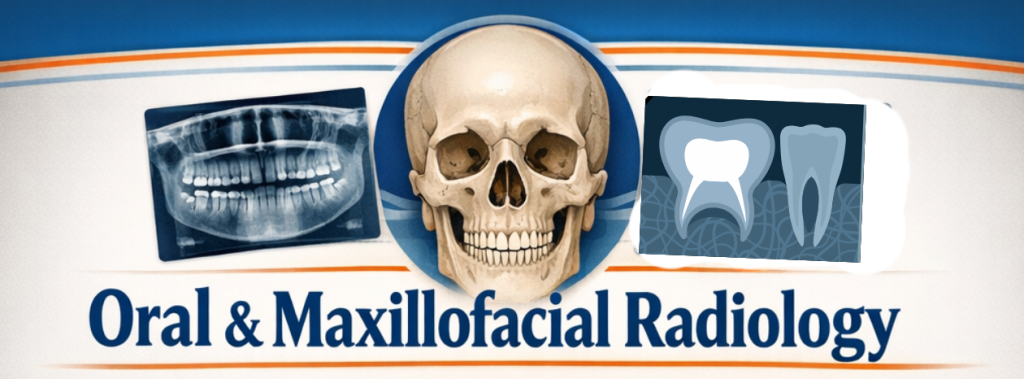
How well do we know about pursuing dental/oral and maxillofacial radiology as a specialty area of study, especially in the U.S? More importantly, in a world dominated by restorations, replacements, and reparations of the tooth and its periphery, do we know enough about a less glamorous discipline?
This blog is our attempt to throw some more light on dental radiology – one of the most promising and upcoming specialties in the world of dentistry, aka a ‘low-hanging-fruit residency.’ The dental world is seeing a surge in the demand for specialist radiologists in recent times, given the rapid growth in the use of advanced radiology and diagnostic tools across dental specialties!

Table of Contents
ToggleWhat is Oral and Maxillofacial Radiology?
Dentists – both traditional American and international – are well aware that Dental/Oral and Maxillofacial Radiology (OMR) is the advanced specialty of radiology for the teeth and jaws. In the words of The American Academy of Oral & Maxillofacial Radiology (AAOMR), the apex governing body for the branch,
“Oral and Maxillofacial Radiology is the production and interpretation of images and data produced by all modalities of radiant energy that are used for the diagnosis and management of diseases, disorders, and conditions of the oral and maxillofacial region.”
It encompasses the study of all imaging modalities used for diagnosis and treatment in dentistry (intraoral, panoramic, cephalometric, CBCT, MRI, ultrasound, etc.). It also includes comprehensive knowledge about 3D imaging, integration of AI and digital workflows for treatment planning, and clear mandates on radiation safety.
However, what many dentists, foreign-trained ones especially, may not know, or seek to know, is complete information about pursuing radiology as a residency in the United States. And at PASS Simplified, our aim is to address that knowledge gap. So let us start at the top and deconstruct the process of becoming a dental radiologist in the U.S. – especially from the perspective of an international dentist trained outside the U.S.
The Real Deal – What does a residency in OMR require?
- We would like to address this question from two angles – one, from an aptitude perspective, and another, from the application perspective.
The Aptitude Angle:
While we firmly believe that expertise can be acquired through rigorous training and a deep-rooted passion for the subject, it is an undeniable fact that certain inherent traits make one an excellent fit for a specific field of study. This is highly relevant to this specialty, especially given its position at the crossroads of diagnostics, technology, and clinical care. For, the primary focus in dental, oral, and maxillofacial radiology is to ascertain the problem and its numerous plausible causes by correlating patients’ complaints and diagnostic images.
In addition to the ubiquitous non-negotiables – coachability, collaborative mindset, clinical excellence, ethical conduct, and clear communication – the following traits add immense value to your claim to become a dental radiology specialist.
- Dentists with heightened analytical skills and a flair for digging into the root (pun intended) of a problem could prove a natural at this aspect of dentistry. Ease in navigating scientific evidence, employing research tools, and engaging in data analysis makes these waters more straightforward to navigate. Thus, an ability to question the known and the single-mindedness to delve into the unknown are big advantages.
- A keen eye for detail is another key quality – an ability to detect what may go undetectable, usually, is a prerequisite for success in this specialty. While hand skills are the hallmark of say, an endodontist or oral surgeon, sharp eyes and a keen mind are a radiologist’s biggest commendations.
- Another notable point here – radiology is also a safer haven for those who are ‘behind the scenes’ professionals. Some of us thrive in speaking to patients and solving their problems, but there are quite a few who’d rather analyze their anatomy and diagnose their anomalies. Radiology is the perfect dockyard for their preferences – healthcare, but without the demands of direct patient care.
That said, aptitude is a vast and fairly vague perspective. A more precise one we can throw light on is the application angle.
- The Application Angle:
Yes, so what does it actually take to become a Dental/Oral and Maxillofacial Radiologist in the U.S?
This is not too different from an application to any other residency program in the country. Let us look at the actual process to become a radiology resident here.
Who can apply to OMR in the U.S?
To begin with, applicants can be categorized based on their
- Qualification
- Traditional American and Canadian dentists who have graduated from CODA-approved dental schools, with a DDS/DMD to their credit.
- In case of these applicants, the application process is quite organic – all schools offering the program across various states are accessible to such applicants.
- International dentists who have graduated (with a dental degree or a Postgraduation in a specific field of dentistry, preferably, radiology) outside the U.S. or Canada.
This broad category could either comprise
- Foreign-trained dentists with a DDS/DMD from a CODA-approved dental program in the U.S., through CAAPID.
Our very own Dr. Nourah is an example of this – before applying for her orthodontic residency at UIC, Dr. Nourah had already graduated from Southern Illinois University with a DMD.
- Foreign dentists without a DDS/DMD from the U.S – they may or may not have a masters/residency in radiology from their home country. Essentially, dentists who have not pursued the CAAPID pathway already.
The most encouraging aspect of pursuing OMR as a specialty vis a vis a number of other specialties, is the openness of schools towards this category of applicants!
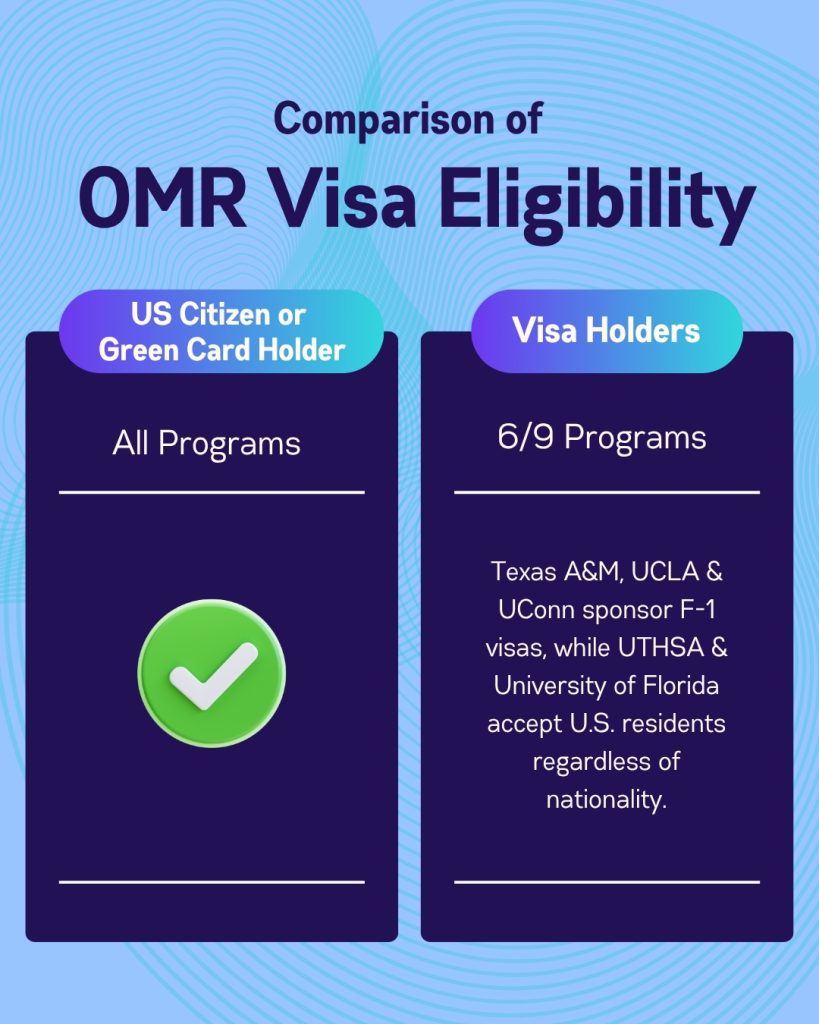
In specific terms, out of the nine schools that do offer Radiology as a specialty, at least six schools actively consider applications from dentists without an American dental degree – these include the more popular names such as Texas A&M, UCLA, UConn, UTHSA etc, among others.
- Visa
One crucial aspect to consider when applying to these dental schools: your visa status!
Again, unlike most other residencies, schools offering OMR are quite favorable toward students without a permanent immigration status in the U.S. Most schools – including Texas A&M, UCLA, and UConn – openly sponsor an F1 visa for eligible candidates, while schools like UTHSA and the University of Florida are willing to consider American residents, irrespective of their nationality.
This is a welcome move indeed, given that the program cohorts are often small (usually between 2 and 3), and can mean additional paperwork for the school to sponsor visas for a small pool of applicants.
How to apply:
The application process for OMR is not unlike those of other residency applications. However, we strongly recommend researching each program’s requirements in detail and in advance, as the requirements may vary from program to program and from time to time.
In general, application is through the centralized dental residency application platform – ADEA PASS (Post-Doctoral Application Support Service), for at least seven out of the nine CODA-approved OMR programs. Two programs – The University of Washington and the University of Iowa – call for direct applications through the school website (a detailed list of all programs/schools offering OMR and their individual requirements are appended below).
Typically, the application process includes the following steps:
- Researching/identifying the programs to apply to
- Uploading/Evaluation of Transcripts
- Clearing the INBDE/ADAT
- Appearing for the TOEFL/GRE
- Filling up the application form in the (PASS) Application Portal
- Readying Application Documents
- Personal Statement
- Letters of Evaluation
- 1 letter from the Dean of your dental school (the Institutional Evaluation Form, IEF)
- 3-5 letters from dental professionals, including a radiology professional preferably (Professional Evaluation Form, PEF)
- CV
- Supplemental Application documents, if any
- Submission of the application
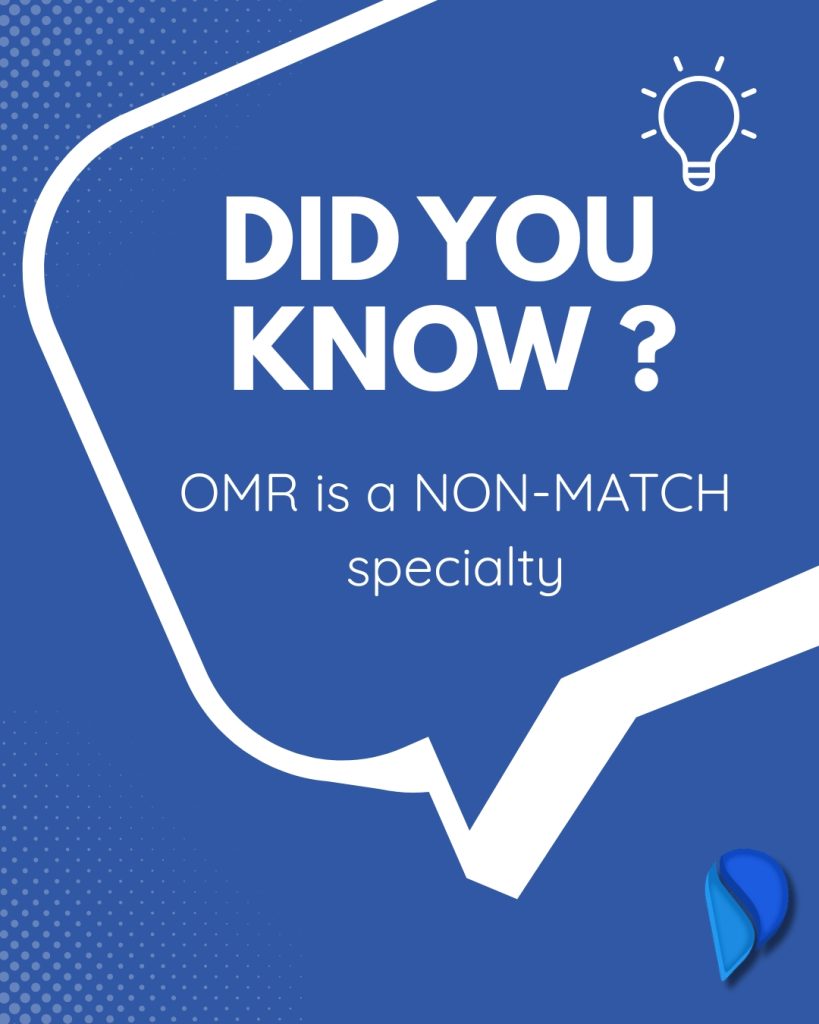
An important point to remember: Oral and Maxillofacial Radiology is a Non-Match Specialty. Hence, you do not need to register on the Match website for this residency branch.
For a thorough and more detailed information, including tips on drafting those documents, do take the time to read our blog All About PASS <link to Nishanthi’s blog>
While the above-mentioned are the documentary prerequisites to the application, we at PASS Simplified also recommend a set of check boxes that can boost your chances of acceptance into the program.
These include, but are not restricted to:
- Academic record – a strong GPA score and a consistent academic track record are real deal-breakers. Some schools may even have a minimum threshold for application – for instance, the University of Iowa clearly mandates a minimum GPA of 3 for traditional dental students.
- Research & publications – proven analytical/research skills can add immense value to your claim to acceptance. Research, publications, presentations – all these carry a good weightage in your candidacy and are perceived favorably by the schools. This is truer in the case of programs that have an inbuilt Master’s option – such as Stony Brook’s OMR program or UTHSA and UConn’s programs.
- Clear trajectory/curation of profile – by this, we mean planning in advance the specialty of your choice, and consciously seeking opportunities in your chosen field. For instance,
- becoming a member of the AAOMR
- shadowing practicing radiologists
Such a well-thought-out plan of action indicates a clear interest in the field and also offers you a tangible head start in understanding its nuances.
Additionally, it comes with another advantage – networking and building valuable connections for the future. We have often heard successful residency applicants extol this vision – of starting early, attending association conferences, identifying shadowing opportunities, and incidentally, bagging future recommenders as well!
- Strong and purposeful documents – a definite fillip to your profile. A captivating statement of purpose, a crisp yet comprehensive resume, and genuine letters have a way of catching the eye and holding the attention of admissions committees, which have to deal with numerous applications every year. It is not about employing sophisticated language or involving creative writing/formatting, but about showcasing your personality and highlighting your fit.
- Community work/volunteering – while this is not a non-negotiable experience, we have come to believe that this can add value and differentiation to your profile, more so as an international dentist. This could go on to prove not only your social conscience, but also your ability to gel well with the local population and your communication abilities.
- Examinations – INBDE/NBDE/ADAT, and language tests such as TOEFL/GREetc are not always mandatory and are dependent on the requirements of the schools you have shortlisted. Most schools clearly list out what are mandatory and what are ‘nice to have.’ However, taking these could lend you a competitive edge/differentiating factor, especially as a foreign-trained dentist. For instance, UConn clearly says
“Part I, Part II or both parts of the Dental Board Examination are not required for admission but are strongly recommended.”
On a similar vein, having a good GRE score may be an added plus if your shortlisted program has a Master’s component.
We like to think of these along the lines of our primary school concept of awarding “+5 for handwriting” – not deal breakers, but definitely brownie points!
The Finer Details – What does a residency in OMR entail?
- Program Size
OMR programs are characterized by very small cohort sizes – with the minimum being 2 (Stony Brook, UWash) to a maximum of 4 (University of Florida, UTHSA). There are approximately only 20-24 seats available in all of the U.S.
Smaller cohorts could mean greater exposure, closer student faculty interaction, and more career opportunities in an upcoming residency, but also higher competition for the few spots.
- Duration
Typically, radiology programs are two-year certificate programs (Stony Brook, UCLA, Texas A&M); however, some of have a Master’s option (UTHSA, UConn), wherein the program may spill over to another additional year.
- Coursework and curriculum
Overall, most programs have been constructed
- with a common ideology – providing extensive training in clinical, teaching, and research skills, and preparing students for the board exam conducted by the AAOMR, and
- around similar curricula and coursework – involving radiation physics and biology, radiographic techniques and interpretation, advanced procedures such as CT, Cone Beam CT (CBCT), and interpretation of MDCT, MRI, etc.
Thus, most of them seem interchangeable. However, if you have a clear vision of your expectations from the program, we suggest you do a thorough research of the program coursework and make an informed choice.
- Master’s or Certificate
Like we mentioned above, some programs do have a Masters’ option – usually subject to residents clearing certain qualifying criteria. Such programs entail a research component and defending a thesis. This is particularly relevant to anyone with a strong aspiration in academics.
And just in case you are wondering whether to consider a program with a Master’s option, a good question to ask yourself to help you decide will be – ‘would I be interested in teaching or academia as an active prospect?’ If the answer to that question is a ‘yes’, then the Master’s option is your way forward.
In UTHSA’s words, “A student who is planning for an academic career may extend his/her Certificate program for six months and complete a thesis to obtain a Master of Science Degree.”
- Fees/Stipend
And finally, we are at the all-consuming and most important question – how much do these programs cost?
For an international dentist, the fee for an OMR program may range anywhere between USD 25K to USD 55K per annum.
These are contingent upon multiple factors such as:
- visa status (whether citizen of the U.S./Canada or need sponsorship for visa)
- degree (whether DDS or a foreign dental degree)
- Certificate or Master’s program
This is the case with stipends too, which could range from nothing to USD 24K per annum.
UConn’s OMR Program is a classic example of this aspect. The school’s Certificate program charges a standard fee of USD 25K per annum, irrespective of whether you are an American dentist or a foreign-trained one. Signing up for their optional Master’s will cost you an additional USD 15K. So your entire program may cost anywhere between USD 50K to USD 65K onwards, depending on your living expenses as well.
When it comes to stipend, the university has differential salaries based on your degree and your resident status.
- A DDS-holder who is also a citizen or green card holder (or a Canadian citizen/permanent residency) will be paid upwards of USD 24K per annum, whereas
- A foreign-trained dentist, regardless of their visa status, is eligible for a USD 13K stipend per annum.
That said, while a residency does not come cheap, it is quite a more feasible option than an advanced standing program for DDS via CAAPID – these programs could set you back by at least a USD 100k loan, at the minimum.
The Complete List – Which Schools/Programs offer OMR
For your convenience, here is a complete list of OMR programs available in the U.S. with a comparison of their key elements.
ADEA PASS – Oral & Maxillofacial Radiology Programs
- Stony Brook University – School of Dental Medicine – ADEA PASS® Program
- Texas A&M College of Dentistry – ADEA PASS® Program
- University of California, Los Angeles – ADEA PASS® Program
- University of Connecticut – ADEA PASS® Program
- University of Florida, Gainesville – ADEA PASS® Program
- University of Texas Health Science Center at San Antonio – ADEA PASS® Program
- University of Washington
Non-PASS Programs
The Path Ahead – What After Residency?
Based on our overall understanding and general analysis, there is a sizeable future demand for specialist radiologists. According to sources, the dental X-ray systems market alone, estimated at USD 1.5bn in 2025, is anticipated to grow to USD 3.5bn by 2035 – a compound annual growth rate (CAGR) of 5.2% over a decade. The increased awareness about the importance of oral and dental health is the key driver for this growth. Riding on this wave will be the increase in demand for dental professionals trained in handling such equipment and engaging in the analysis of their findings – such as dental and oral radiologists.
While we have not officially heard of a planned increase in the number of programs or seats for radiology in the immediate future, the ten-year trend released by ADA’s Health Policy Institute shows a promising rise in the number of radiology graduates, from 14 in the year 2014 to 22 in 2024. Let the small numbers not fool you – that still translates into a 57% jump in the graduate pool, a fairly promising prospect for anyone interested in the specialty.
With that in mind, let us take a quick look at the most likely career path(s) ahead of professionals.
- Education/Academia
A preferred path among many OMRs is to work as educators in training dental, dental hygiene, and/or graduate dental students. This role calls for clinical instruction alongside interpretation of disease, combining radiology with oral pathology, diagnosis and medicine.
- Clinical Practice
The most common area of employment of OMRs is to render radiographic services to patients. Their typical services include performing intraoral and panoramic radiography, TMJ and implant tomography, orthodontic radiographic examinations and diagnostic consultations. Employment centers could be one or even a combination of the below:
- Private imaging centers
- Hospitals and DSOs or
- Multidisciplinary diagnostic facilities
- Corporate
We employ this broader terminology to indicate roles beyond patient-centric clinical services, and employing their expertise at entities engaged in digital dentistry, teleradiology, manufacture of dental equipments etc.
- Research
This may be a stand-alone role or one among the many roles of a qualified faculty at dental schools; either way, research is a popular career choice amongst practitioners.
Earning Estimates
The average salary for an OMR largely depends on their kind and place of employment, but studies by recruitment agencies estimate an average salary of USD 75K per annum, ranging from USD 40K to USD 135K and benefits, depending on various factors. California tops the charts with the highest salary ranges.
Other estimates put radiology on a higher earning scale, touching upon half a million U.S. dollars per annum, depending on the subspecialty.
Here is an interesting job posting at a popular recruiter that also summarizes this section succinctly.
A Gentle Reminder: Licensure
One important aspect to remember when it comes to employment and practice is that graduating from your certificate program/Master’s degree does not guarantee a license to practice. Upon completion, graduates may take the board certification examination offered by the American Board of Oral and Maxillofacial Radiology (ABOMR)and become board-certified radiologists. Sponsored by the AAOMR, the ABOMR is the only certifying body for dental radiologists in the U.S. In the words of the Board,
“Completion from an OMR program is one of the eligibility requirements for graduates to sit for the Diplomate examination of the American Board of Oral and Maxillofacial Radiology.”
“A Board Certified OMR, or Diplomate, is an expert in the specialty of Oral and Maxillofacial Radiology and has achieved the highest standard in clinical practice through rigorous examination by their peers – the American Board of Oral and Maxillofacial Radiology (ABOMR). ”
Some states require additional radiology permits to practice, and it is imperative to check with
- Your state dental board and
- The ABOMR
The graduation is only an attestation to your ability and competency to perform radiography.
With that, we believe we have presented you with a comprehensive overview of dental and oral and maxillofacial radiology. We genuinely hope this will be both a starting point and also a complete guide, while you evaluate your choice of specialty and the feasibility of pursuing!
Before we sign off, here are a set of resources that could come in handy while you go ahead full steam!
- Useful Resources
- All About PASS
- TOEFL
- Documents
- PS blog
- Letters Blog
- CV Blog
- CAAPID vs PASS Statements
- Why This Specialty/Program Blog
- Other Specialties

Pingback: ADEA PASS Resources: Essential Guide for Applicants